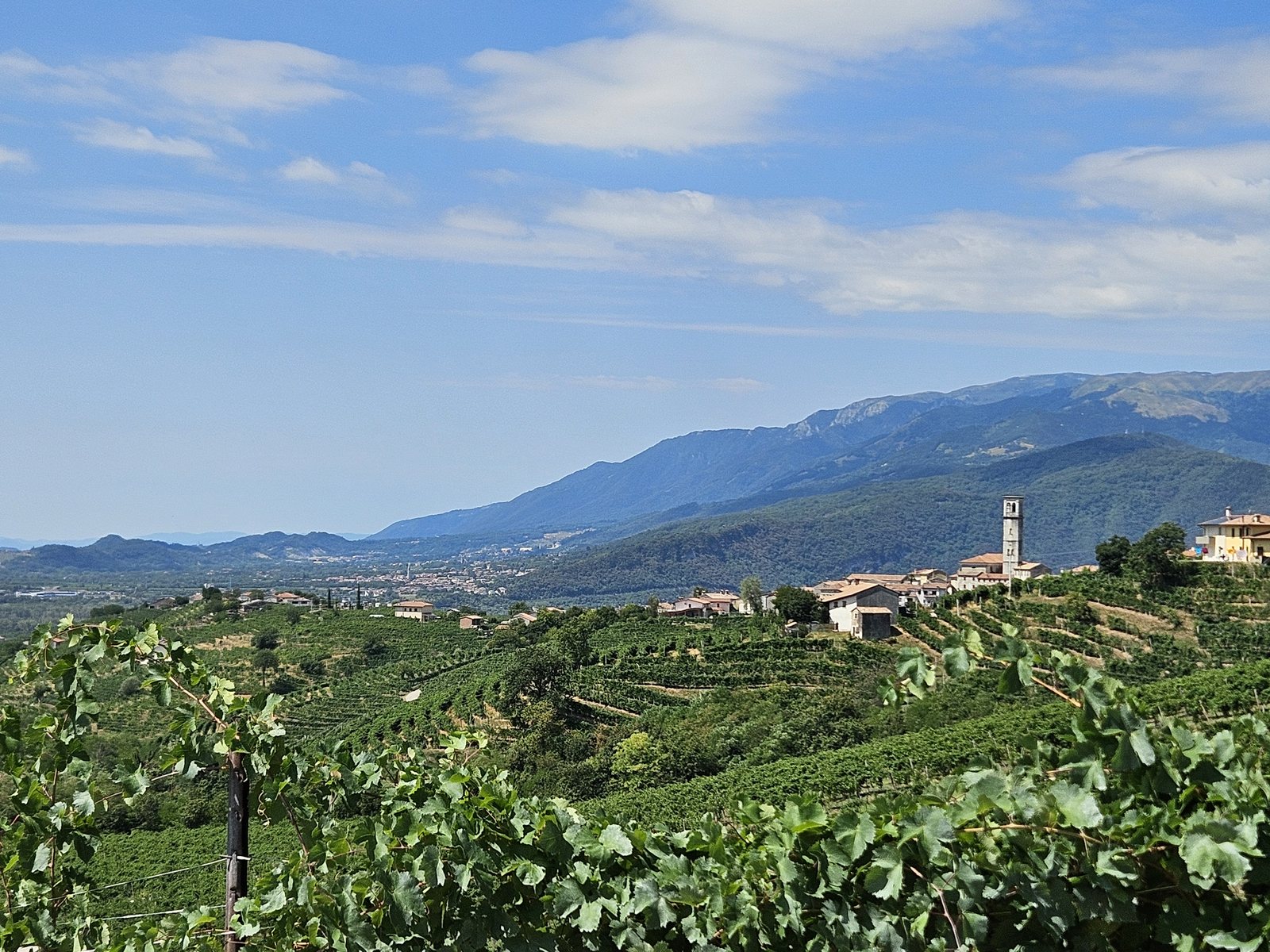


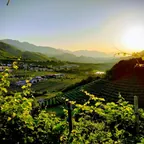

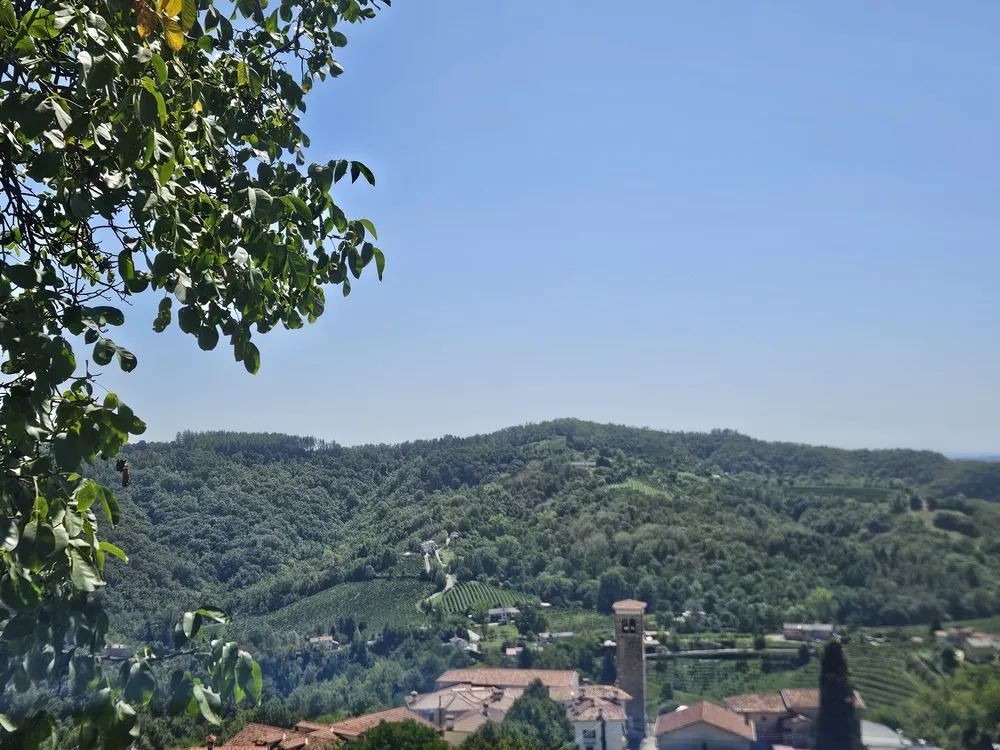
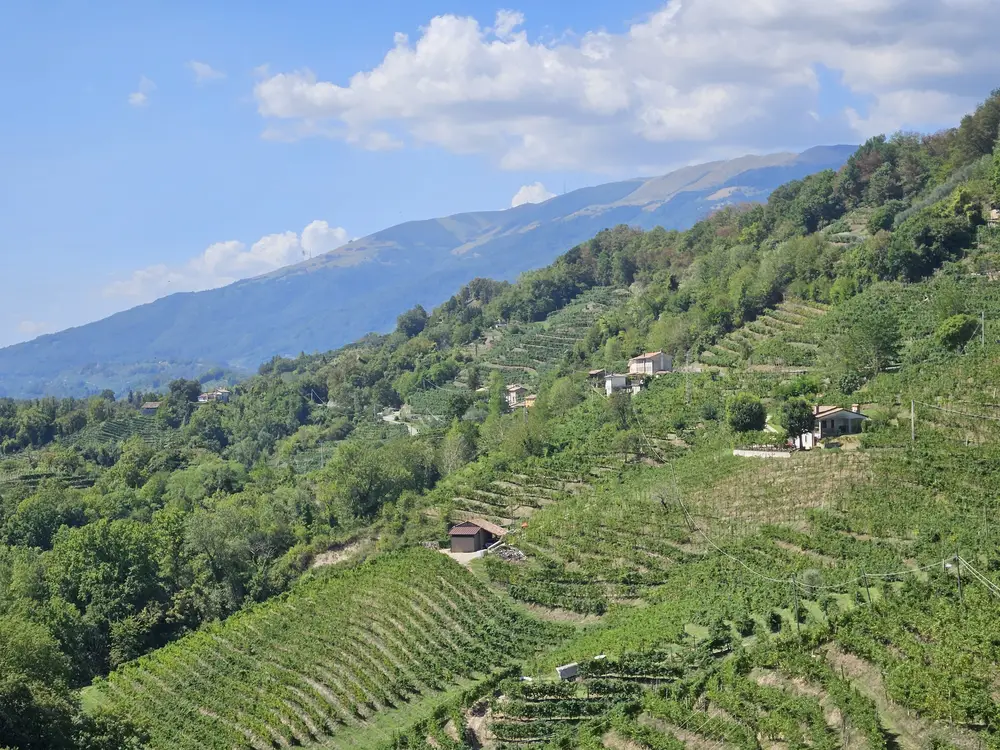
The Strada del Prosecco e Vini dei Colli Conegliano Valdobbiadene runs from Conegliano to Valdobbiadene, crossing the heart of the Prosecco DOCG. Created in 1966, it was the first wine route ever established in Italy: a road tracing the ridge of the hills, slipping into the villages and skirting the terraced vineyards that became a UNESCO World Heritage Site in 2019.
Read more ↓
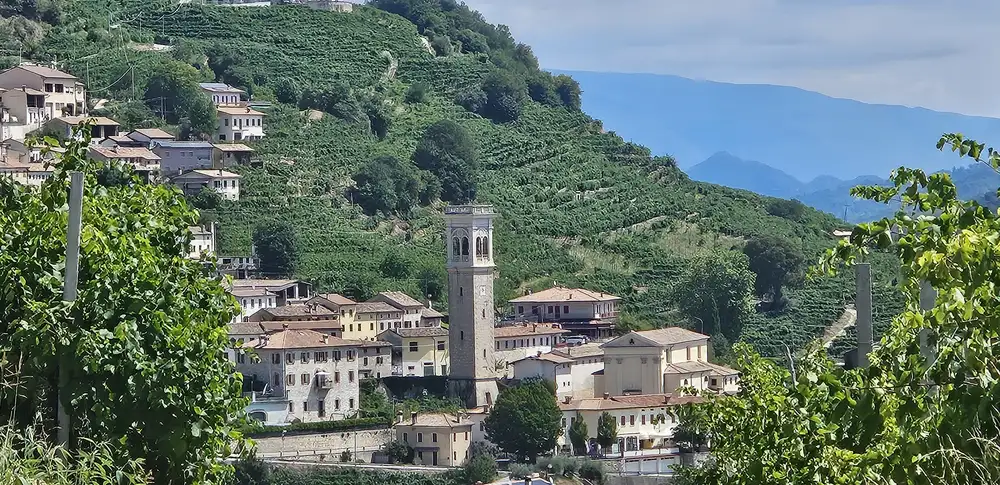
This is no wine motorway to be driven in one go. It's a sequence of narrow roads and hairpin bends where the meaning lies in the stops: a Cistercian abbey in Follina, a mill beneath a waterfall in the Lierza valley, a village built in stone near Cison, a viewpoint over Cartizze, a winery where you linger to talk with the people who make the wine.
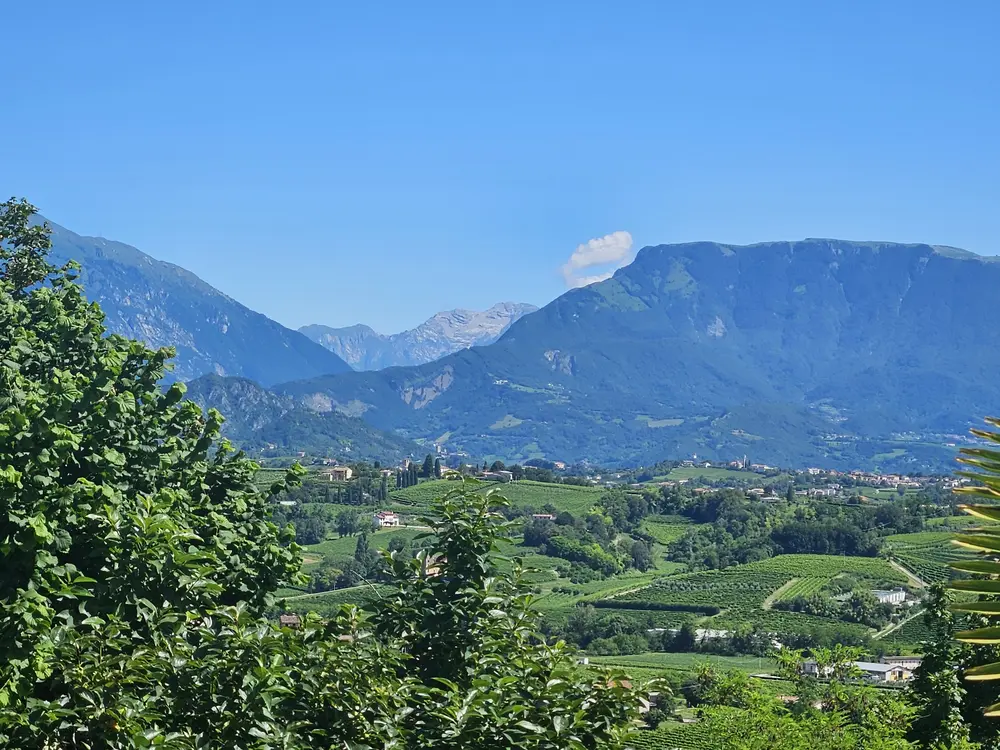
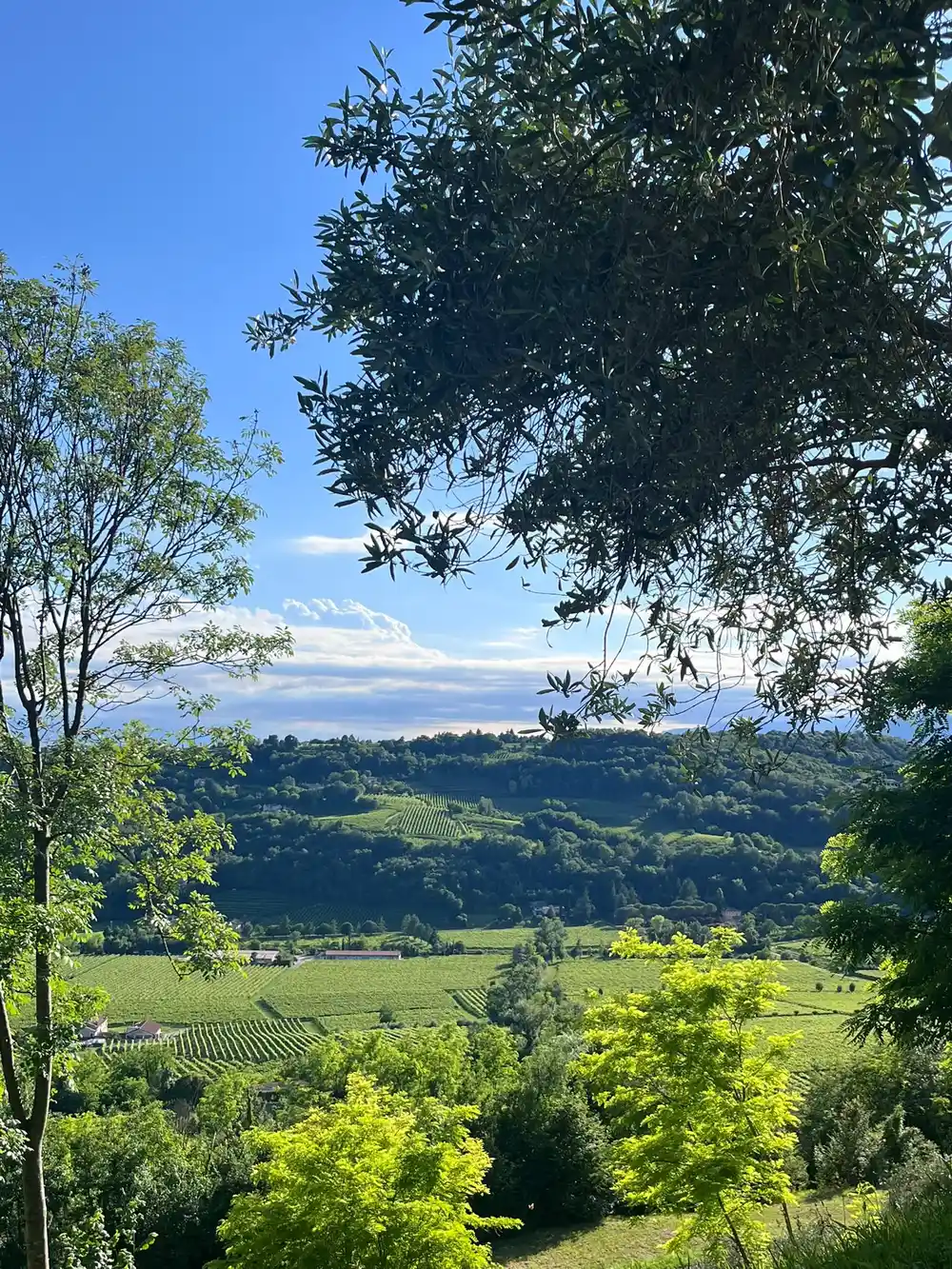
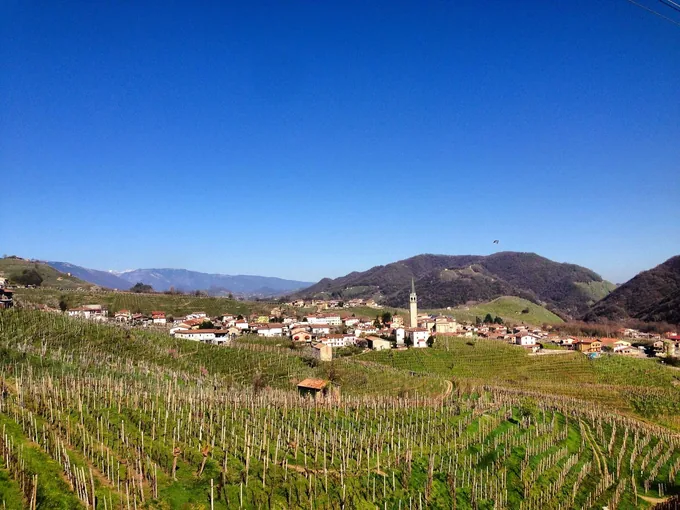
From east to west the landscape shifts constantly: the generous planted hills around Conegliano, the Quartier del Piave with its villages and abbeys, and finally the Cartizze triangle, where the gradients turn extreme and the vines are still worked by hand.
Stage 1 — From Conegliano to the Quartier del Piave
Conegliano is where the wine gets studied before it gets admired. Italy's first oenology school opened here in 1876, and the region's sparkling wine tradition was effectively born inside it.
The frescoed Aula Magna and the Museo Manzoni — named after the professor who bred the grape crossings that still carry his surname — keep that research alive, and the school's Bottega del Vino pours the labels made in its own teaching winery.
Read more ↓
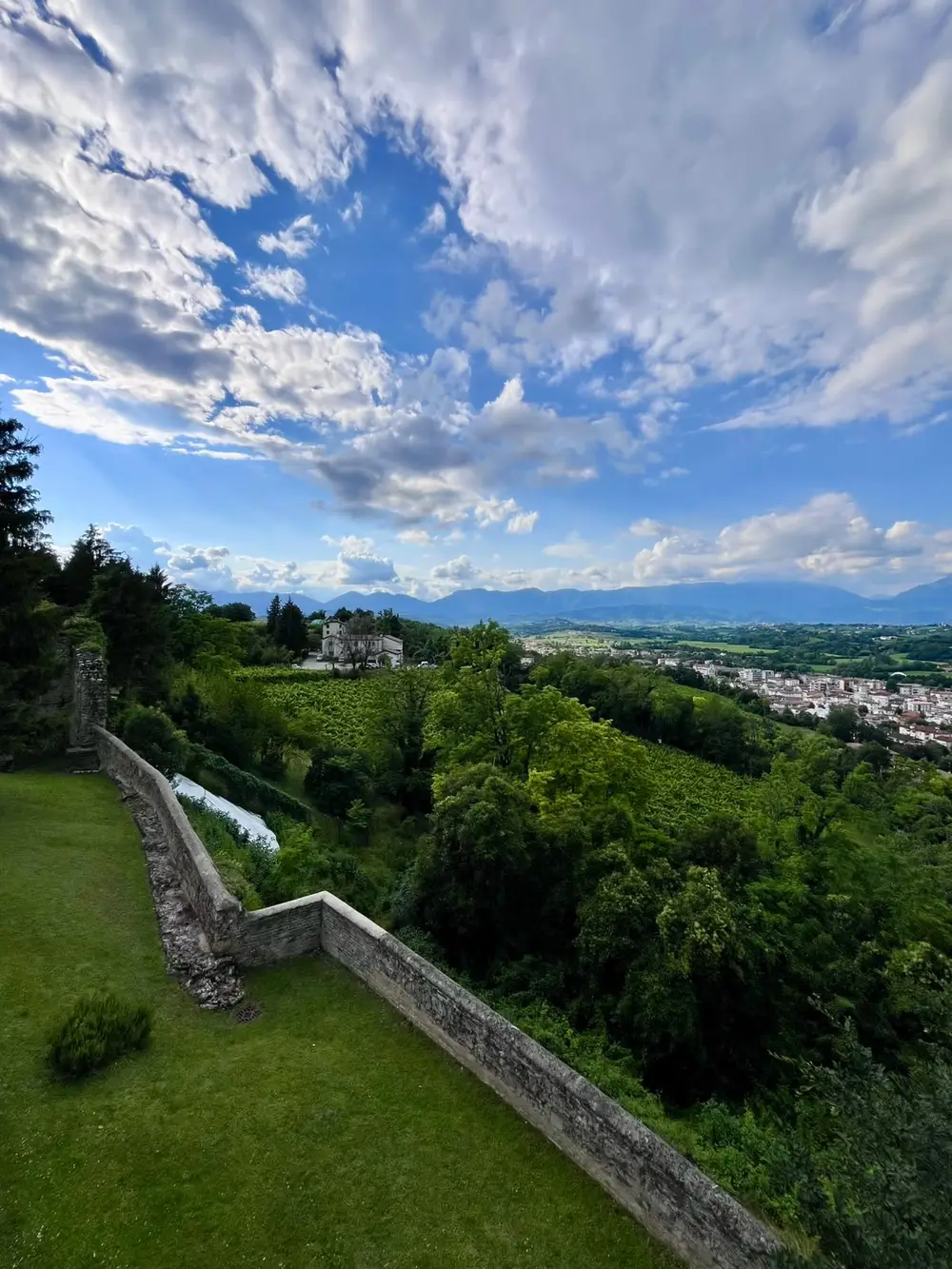
The old town is best walked. Contrada Granda, arcaded end to end, leads up to the Duomo; fifteen minutes of climbing beyond it brings you to the castle on the Colle di Giano, its civic museum, and a view that takes in the entire crown of hills.
Heading west, the road climbs to San Pietro di Feletto. The twelfth-century Pieve holds the late-medieval Cristo della Domenica frescoes, and its churchyard is a viewpoint in its own right.
A little further south, on the hill above Susegana, the Collalto family's Castello di San Salvatore ranks among the largest hillside castles in Italy — it opens for events, so check the calendar before making the detour.
One more stop before the Quartier del Piave: Refrontolo. The Molinetto della Croda, a seventeenth-century watermill set into the rock beneath a twelve-metre waterfall, is probably the most photographed corner in the whole province. The interior can be visited, though opening hours shift with the season.
Partner wineries on this stage
Book on WhatsApp, pay at the winery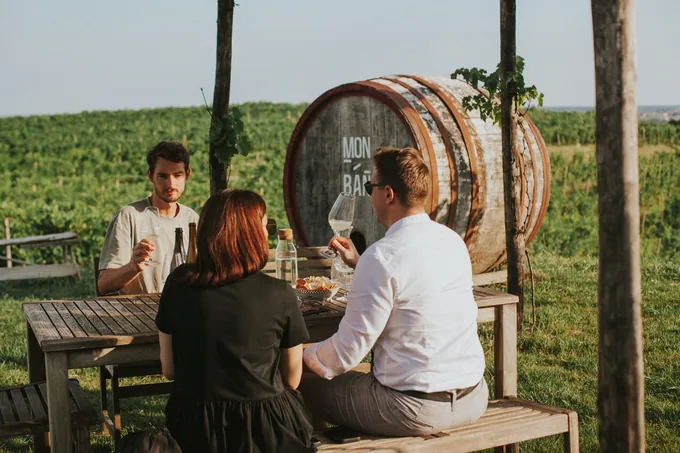
Monban
🌿 Natural winesVisita e degustazione - Scopri i vini naturali tra le colline del Prosecco
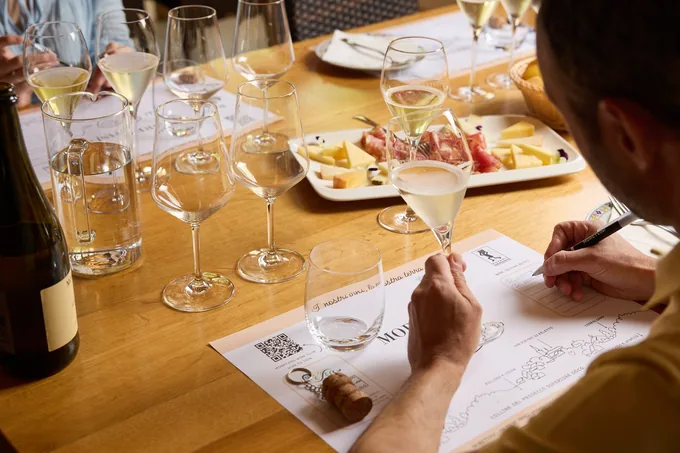
Moretvini
🍇 Wines to discoverWine Tasting Pro
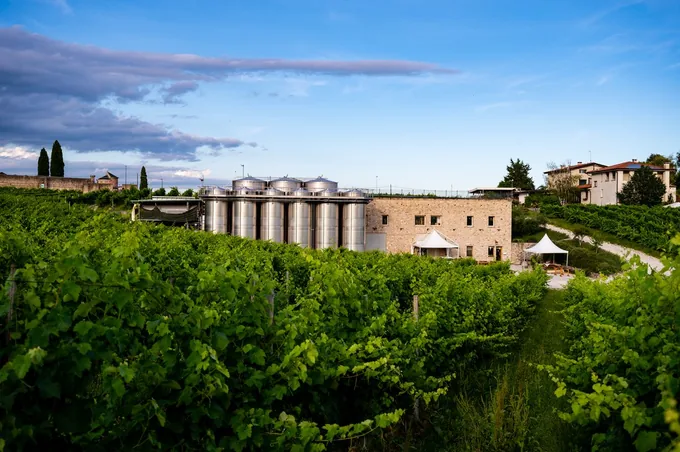
Toffoli Vincenzo
⛰️ Refrontolo hillsTra Radici, Cantina e Prosecco Superiore: visita con degustazione
Stage 2 — The Quartier del Piave: villages, abbeys and ridgelines
This is the middle stretch, and for many the finest: one small village after another, each hiding something worth the stop. Solighetto marks the entrance, with Villa Brandolini — an eighteenth-century Venetian villa, today home to the Consorzio di Tutela. From here the road threads between the hills and every bend turns up another village.
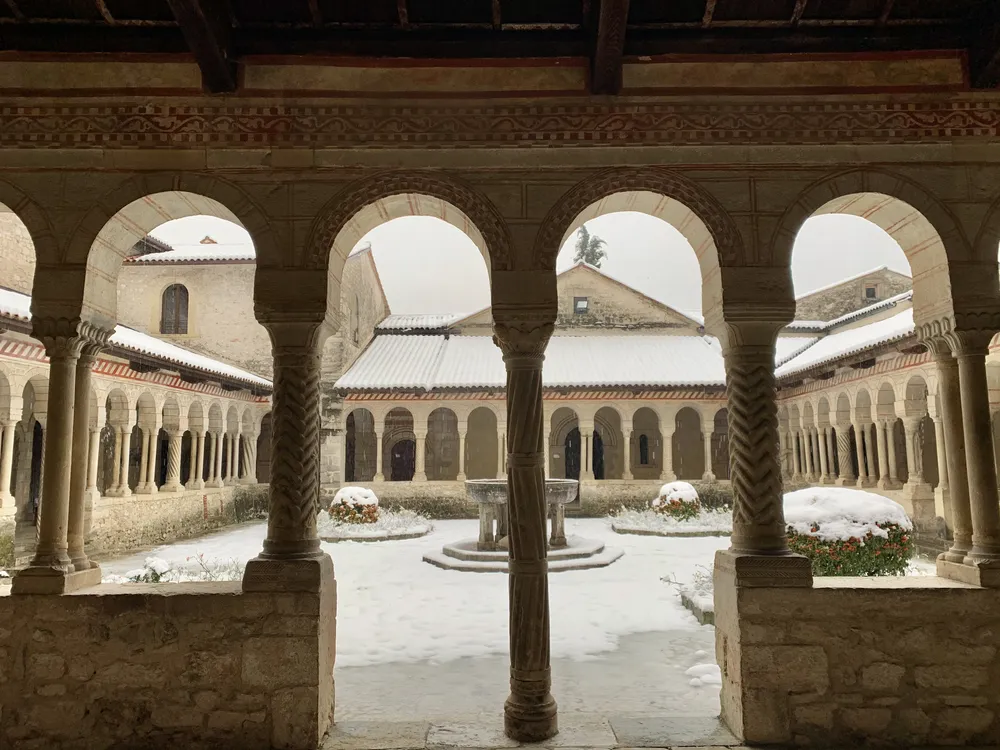
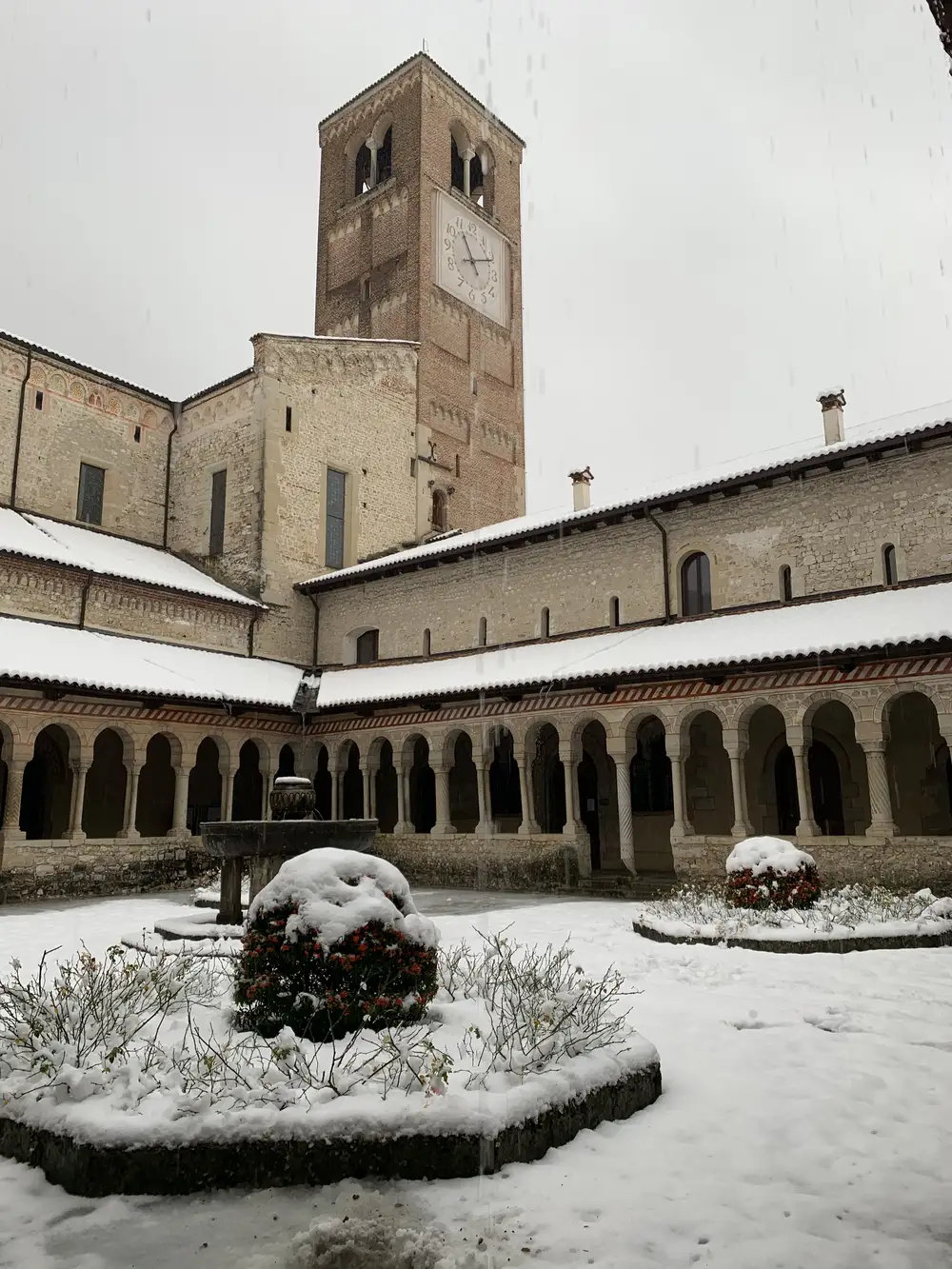
Follina grew around its twelfth-century Cistercian abbey, whose Romanesque cloister is among the loveliest in the Veneto. Entry is free; you're only asked to respect service times.
Read more ↓
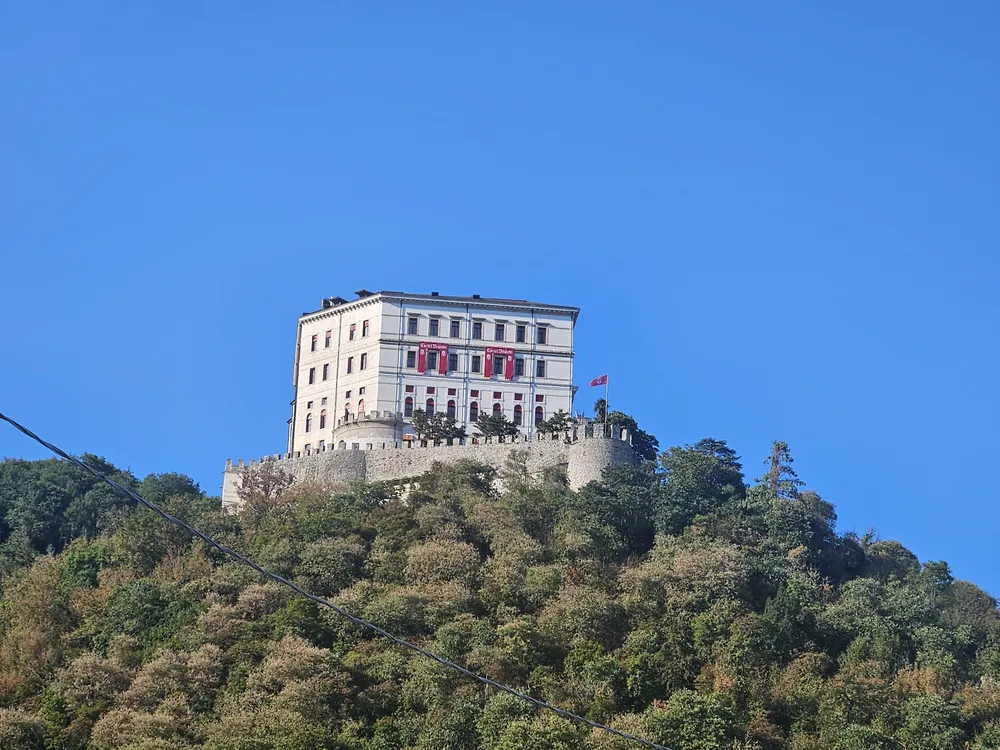
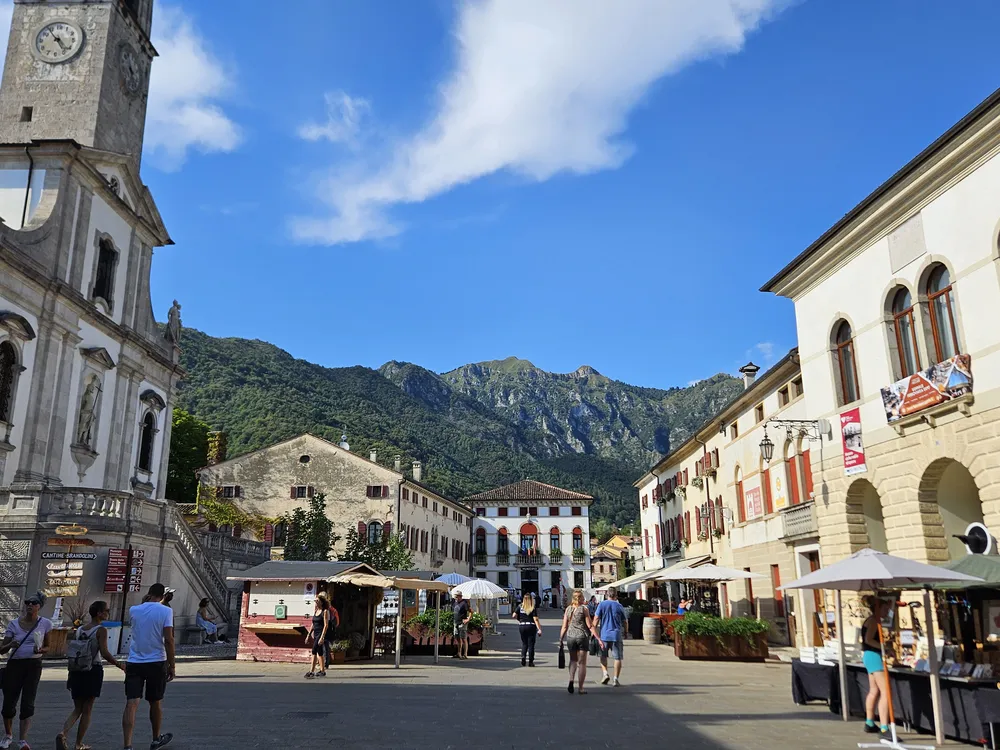
A few kilometres higher, Cison di Valmarino belongs to the Borghi più belli d'Italia circuit — Piazza Roma, Palazzo Barbi, the Teatro della Loggia, streams running through it, and above all Castelbrando, one of Europe's largest and oldest castles, reached from the village by funicular.
Between Follina and Cison, a short detour buys you two stops almost nobody knows about. The first is Rolle: a tiny cluster of houses wrapped entirely in vineyards, which in 2004 became the first Italian village placed under FAI protection. Parking is close to non-existent, but the view earns the stop.
The second is Mura, a handful of stone houses with the Soligo winding between them, cobbled lanes and old drinking fountains. At Christmas it hosts more than a hundred handmade nativity scenes, so perfectly at home in the setting that you half suspect you've walked into one yourself.
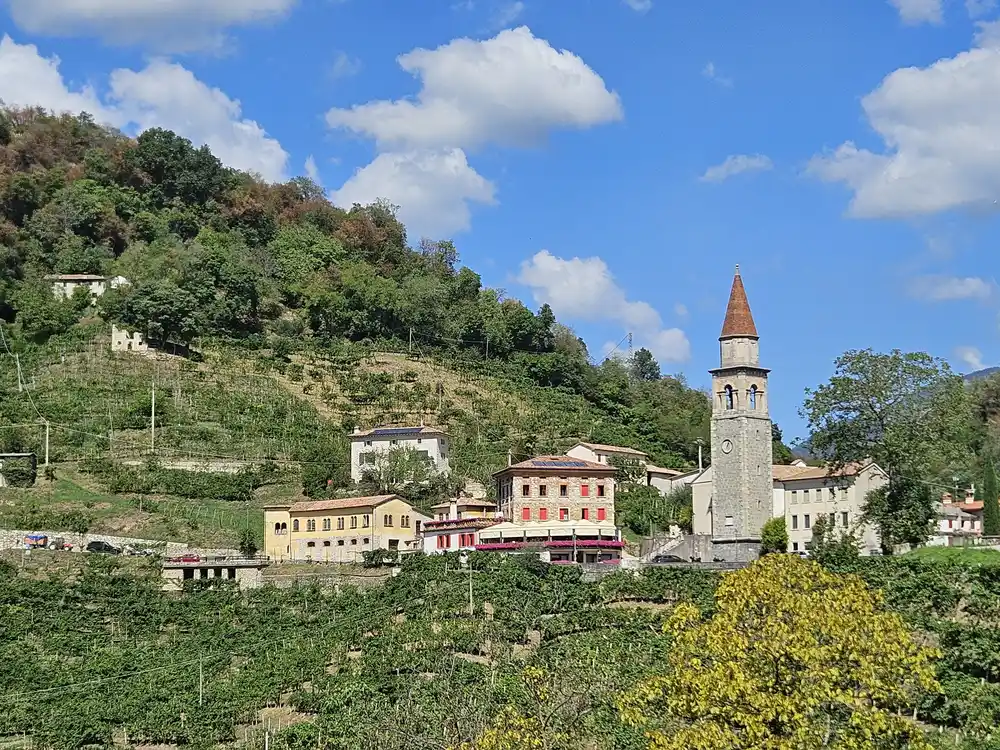
On the opposite slope, towards Miane, Combai is the stone village among the chestnut woods — home of the Marroni IGP and of the autumn festival that carries their name.
And if you're up for a walk, the Bosco delle Penne Mozze above Cison is a quiet trail through sculpted memorial stones, dedicated to the fallen Alpini.
Partner wineries on this stage
Book on WhatsApp, pay at the winery
Stage 3 — The Cartizze area and Valdobbiadene
The final stretch of the route is the most dramatic. Beyond the Piave, the hill at Vidor and its Benedictine abbey of Santa Bona — which stood on the front line during the First World War — marks the start of the serious gradients.
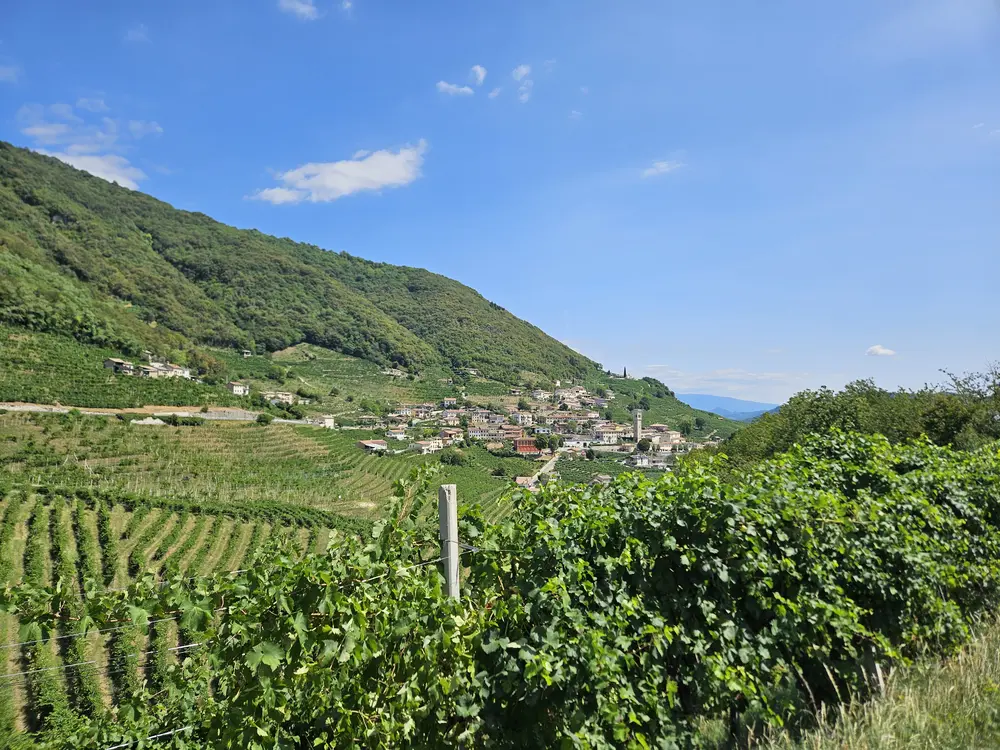
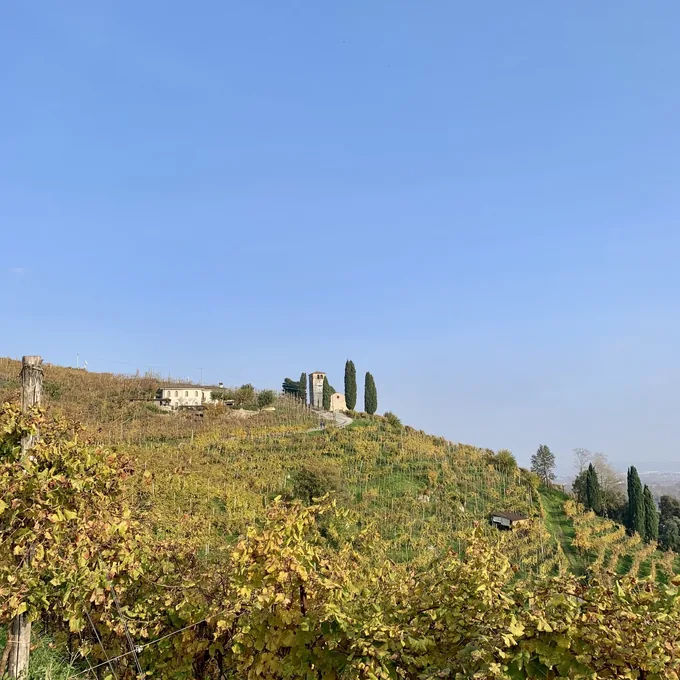
From here the road climbs to Guia, a hillside village set among the steepest Rive and the heartland of what is known as heroic viticulture: slopes too severe for any machinery, where every stage of the work is still done by hand.
Read more ↓
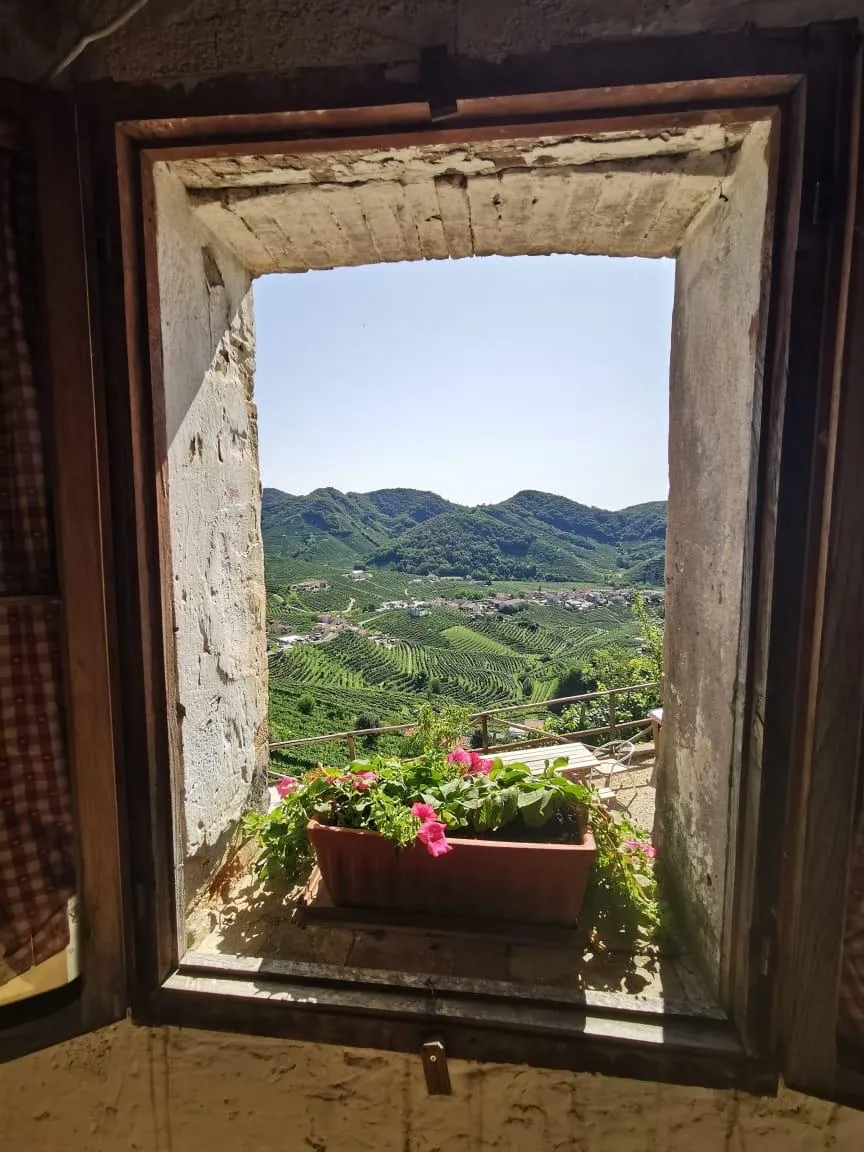
Cartizze follows: about 108 hectares across San Pietro di Barbozza, Santo Stefano and Saccol, the most prestigious cru in the appellation.
The viewpoint is reached by the narrow lanes rising from San Pietro di Barbozza, where parking is permitted only in the marked lay-bys. A little further on, the Rive di Santo Stefano reveal the terraces and grassy ciglioni that have become the defining image of the UNESCO landscape.
The route ends in Valdobbiadene, where the nineteenth-century grounds of Villa dei Cedri offer shade for a pause. Those who want to go higher will find Pianezze and Monte Cesen twenty minutes away by car: between 1,000 and 1,400 metres, with open meadows, working malghe and views stretching from the hills to the Venetian lagoon.
Partner wineries on this stage
Book on WhatsApp, pay at the winery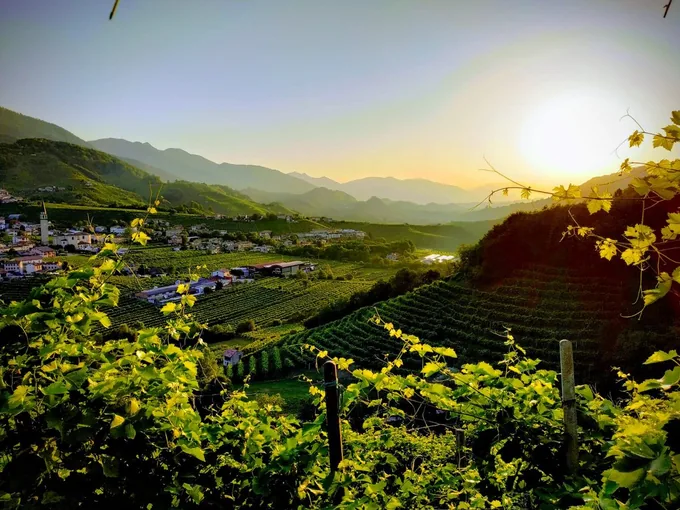
Marsuret
⛰️ Hillside growersScopri Marsuret
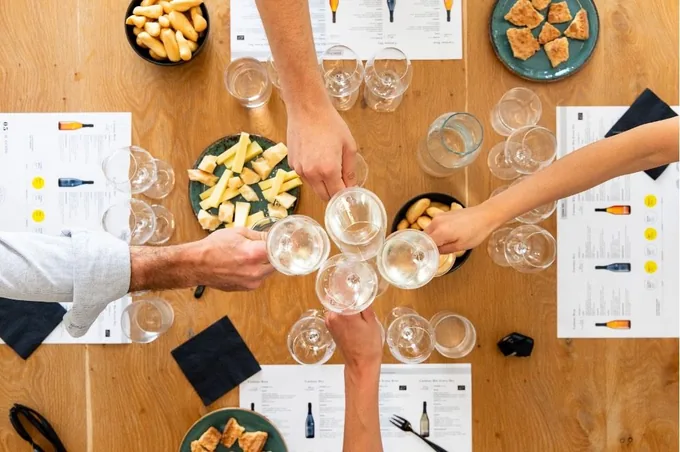
PDC Cartizze
✨ Cartizze DOCGDEGUSTAZIONE CARTIZZE
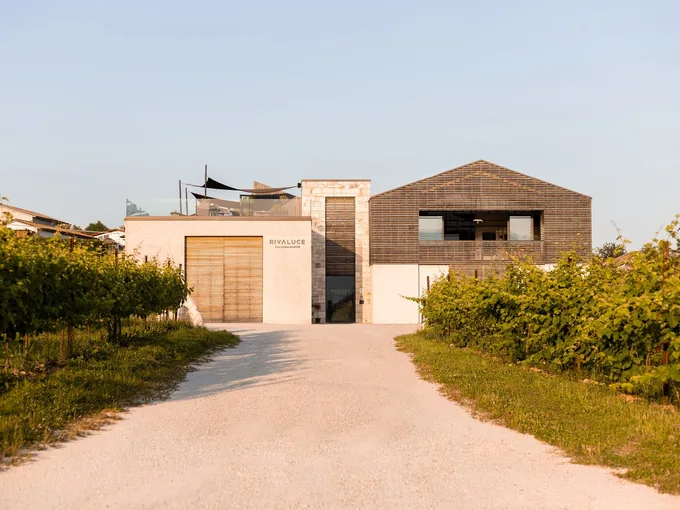
Rivaluce Winery
☀️ ViewDalla Riva al Calice – Degustazione guidata
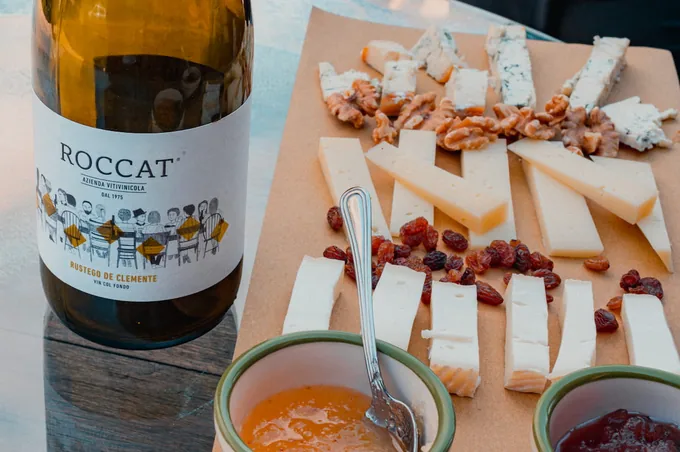
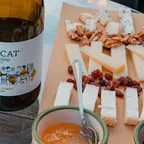
Roccat
🏛️ Heritage familyLa via dell'Amicizia - Wine Experience
By car, bike or on foot
By car or motorbike: half a day, a full day with stops
The car is the classic choice, and the only realistic one if you want to see the whole area in a single day and pick up a few bottles of Prosecco Superiore DOCG along the way. The roads are narrow and full of hairpin bends, so allow twice the time your satnav suggests. On spring and autumn weekends the stretches around Cartizze can get busy, and the handful of parking spaces in the hillside villages fill up quickly.
By bike or e-bike: two days, or a single stage
This is much-loved cycling country, and for good reason: the climbs are short but relentless, and the alternation of vine rows and woodland means no two ascents feel alike. E-bikes have opened the route up to almost everyone, and can be hired from a number of local operators. Travelling this way, stopping at a winery becomes the most natural thing in the world — though you may need to come back by car if you want to stock up.
On foot: the ridge walk above Soligo
The whole route isn't walkable, but its finest section is. Above Soligo, the hill of San Gallo and its ancient hermitage make an ideal pause and mark the start of a ridge that can be walked end to end: on to Collagù, an isolated village among the vineyards with its small sanctuary church, consecrated in 1932; then the Torri di Credazzo, medieval towers of Lombard origin standing among the vines; and down to the Romanesque church of San Vigilio above Col San Martino. It's a ridge crossing through some of the quietest and most panoramic ground in these hills, and it takes half a day.
Four stops just off the route
Serravalle, the medieval core of Vittorio Veneto, with its theatrical main square, frescoed palazzi and the Loggia housing the Museo del Cenedese. Half a day well spent.
The Grotte del Caglieron at Fregona: a gorge crossed by walkways suspended between waterfalls and old sandstone quarries, a spectacular kilometre of trail. Sturdy shoes are essential, and it isn't suitable for pushchairs.
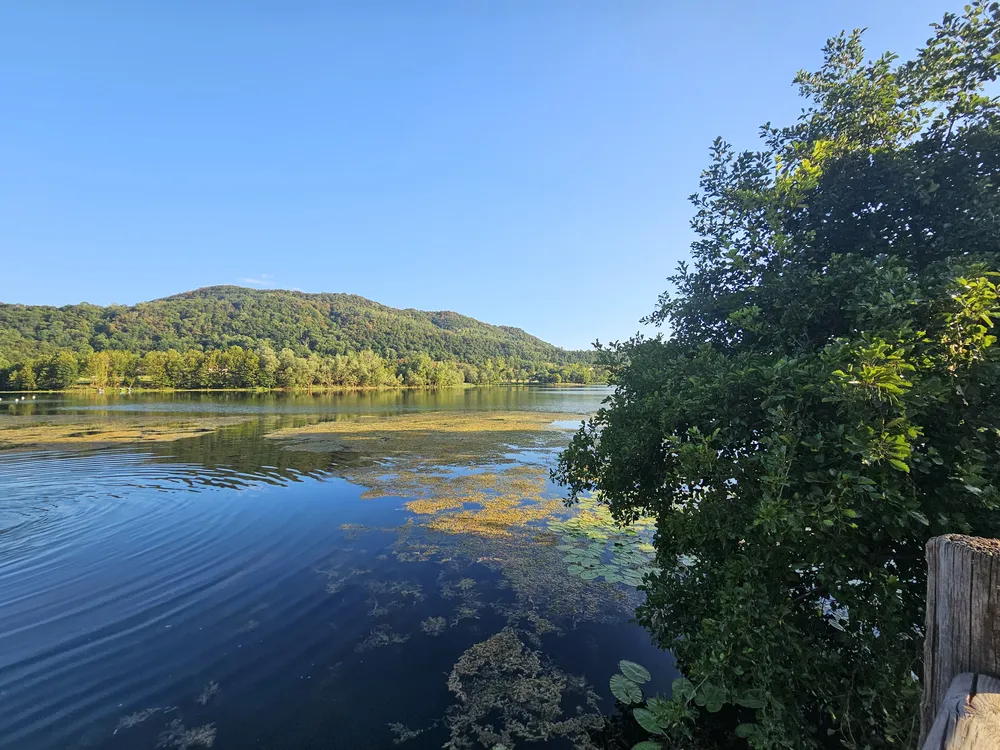
The Revine lakes, two glacial basins at the foot of the Prealps, with a circular walking route and the Livelet archaeological park alongside. There's a pleasant lakeside bar for a break. A few minutes away on the shore stands the Leone Alato di Vaia: seven metres of timber salvaged from trees felled by the 2018 storm, and the largest wooden lion in the world.
The Passo San Boldo, known as the road of a hundred days: hairpin bends cut by hand through tunnels in the rock in 1918, a feat of military engineering. The carriageway is narrow with alternating one-way traffic, and not recommended for campervans.
When to go
Spring is wine fair season in the villages: from March to June the Primavera del Prosecco Superiore brings the whole area to life. Summer means long evenings, dinners among the vine rows and the open-air nights of Calici di Stelle. September belongs to the harvest — the liveliest month of all, when the wineries are visibly at work. Autumn lights up the chestnut woods around Combai and the colours of the Rive, while winter is quiet, with the nativity scenes of Mura in December.
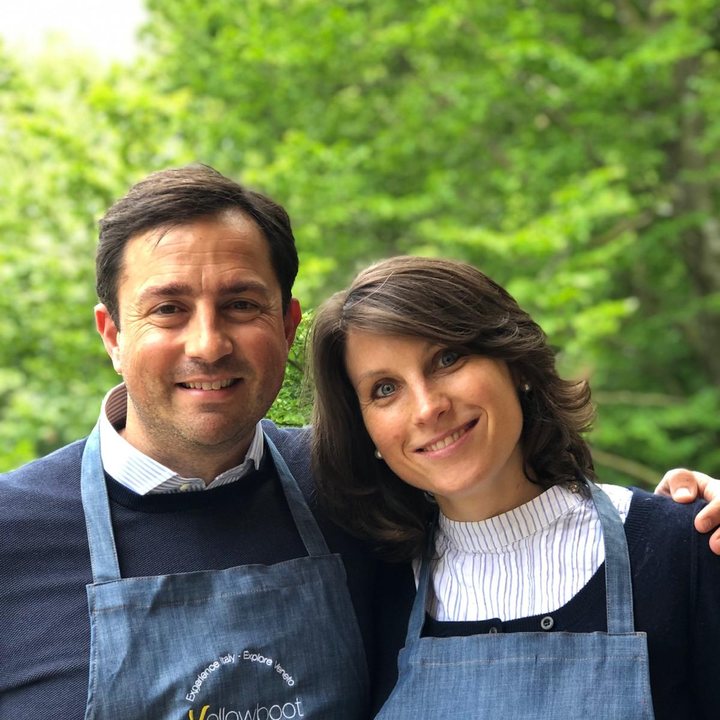
Guided tours
Don’t want to drive? Go with Giulia and Carlo
Yellowboot is a family-run tour operator from Conegliano. Small groups, pick-up from Venice too, and wineries you would not find on your own.
4.9 · 2,000+ reviews · 12 years in the hills
See the tours →Frequently asked questions about the Prosecco Road
What is the Strada del Prosecco (the Prosecco route)?+
It's the route linking Conegliano to Valdobbiadene through the hills of Prosecco Superiore DOCG. Established in 1966, it was the first wine route created in Italy. It isn't a single road but a signposted itinerary connecting villages, wineries and viewpoints.
How long is it and how much time does it take?+
It depends which branches you take: the historic stretch between Conegliano and Valdobbiadene is shorter, while the route as a whole, thematic loops included, stays under a hundred kilometres. By car the main section can be covered in half a day, but a full day allows for a few stops, and two days if you want to add one or two winery experiences. By bike it divides comfortably into two stages. On foot, only the ridge section can be walked, not the whole route.
Is it better to start from Conegliano or Valdobbiadene?+
It works in both directions. Starting from Conegliano, the landscape builds gradually and finishes at Cartizze, the most spectacular point — this is the order we'd suggest. Starting from Valdobbiadene puts the toughest section first and ends in the city, which is convenient if you're staying in Conegliano or leaving by train.
Can it be cycled, or ridden by e-bike?+
Yes, and it's one of the best ways to do it. The climbs are short but relentless: an e-bike makes the route accessible to almost anyone, and several local operators offer hire. On high-season weekends the roads around Cartizze get busy, so early morning is best.
Is there a walking trail through the Prosecco hills?+
The ridge section above Soligo can be walked end to end: from the hill of San Gallo on to Collagù, the Torri di Credazzo and the small church of San Vigilio, with views over the Quartier del Piave. It's a half-day crossing. One practical warning: for Collagù, follow the signs for «Santuario Collagù» rather than Google Maps, which sends you astray on the final stretch.
Can I visit a winery along the route?+
Yes — it's the reason the Strada exists in the first place. Prosecconow's partner wineries are spread across all three sections and offer experiences with set times and prices: choose your slot and book via WhatsApp in thirty seconds. Almost all of them require an appointment; turning up unannounced often means finding the doors closed.
Where can I park?+
There are public car parks in the centres of Conegliano, Follina, Cison and Valdobbiadene. Up in the hills space is minimal: stop only in the marked lay-bys along the panoramic roads, and in winery courtyards when you have a booking.
Is the Strada del Prosecco the same as the UNESCO Hills?+
Not quite. Le Colline del Prosecco di Conegliano e Valdobbiadene have been a UNESCO World Heritage Site since 2019 and refer to the landscape itself; the Strada del Prosecco is the route that crosses it and makes it visitable. Travelling the route takes you into the UNESCO site, but the two terms aren't interchangeable.
What are you up to today along the Prosecco Road?
We'll tell you. Bookable winery experiences along the route — 30 seconds, WhatsApp, nothing else.
See what's on today →